•  
Hacked Emails Expose Bashar al-Assad and Wife (Files)

Hacked Emails Expose Bashar al-Assad and Wife (Files)

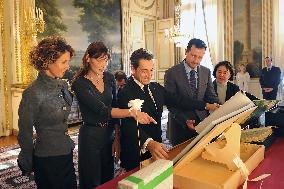
Syrian head of state Bashar al-Assad and London-born wife Asma al-Assad appear to live in a surreal psychological bubble, insulated from the grotesque violence that has claimed the lives of 8,000 Syrians, according to a cache of some 3,000 alleged emails and documents obtained by Syrian activists and published by the Guardian issue dated March 15, 2012. File photo : French President Nicolas Sarkozy (C) and his wife Carla Bruni Sarkozy (2nd from L) show Syrian President Bashar El Assad (R) and his wife Asma (1st from L) gifts, such as 'Earth Seen from Above' book at the Elysee Palace in Paris, France on December 9, 2010, on the first day of the 3-days working visit of the Syrian presidential couple in France. Photo by Balkis Press/ABACAPRESS.COM

  •  

Civilians in DR Congo's Sake suffer from rebel M23 offensive

STORY: Civilians in DR Congo's Sake suffer from rebel M23 offensive SHOOTING TIME: Feb. 13, 2024 DATELINE: Feb. 14, 2024 LENGTH: 00:02:29 LOCATION: Kinshasa CATEGORY: SOCIETY SHOTLIST: 1. various of people fleeing Sake towards Goma, eastern DR Congo 2. SOUNDBITE 1 (Swahili): EUSTACHE GASORE, Displaced person 3. SOUNDBITE 2 (Swahili): SON AMANI, Displaced person 4. SOUNDBITE 3 (Swahili): GUILAIN IRUNVA, Displaced person STORYLINE: For several weeks, residents of Sake, a city in the eastern Democratic Republic of the Congo (DRC), have been living under the intensive exchange of heavy weapons fire as fighting flared up between government troops and March 23 Movement (M23) rebels, Xinhua correspondents observed on the ground. Located about 20 km from Goma, the capital of North Kivu province, much of which is occupied by the M23, Sake City is considered to be the last barrier for Goma, which was taken by M23 rebels in late 2012. The DRC army and military partners such as the Southern African Development

  •  
CHINA-GUANGXI-NAPO COUNTY-DEVELOPMENT (CN)

CHINA-GUANGXI-NAPO COUNTY-DEVELOPMENT (CN)

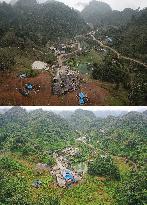
(230803) -- NAPO COUNTY, Aug. 3, 2023 (Xinhua) -- This combination of two aerial photos shows houses built with bricks and mortar in Shuinongtun on March 18, 2018 (above) and new houses constructed with concrete and steel in Shuinongtun on Oct. 16, 2020, in Napo County, south China's Guangxi Zhuang Autonomous Region. Guangxi started at the end of 2008 an infrastructure project in its border area to improve the life of local people. During the five years between 2008 and 2012, Guangxi had conducted 8,801 projects in the Napo border area, covering various aspects of people's daily life including transportation, education, water supply, house renovation and so on, benefiting over 77,000 people from 59 villages in six townships. With continuous efforts of local government and people, living conditions in border area of Guangxi have been improved fundamentally. (Xinhua/Zhang Ailin)

  •  
CHINA-GUANGXI-NAPO COUNTY-DEVELOPMENT (CN)

CHINA-GUANGXI-NAPO COUNTY-DEVELOPMENT (CN)

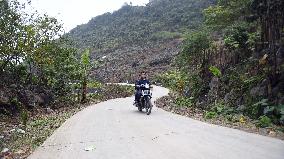
(230803) -- NAPO COUNTY, Aug. 3, 2023 (Xinhua) -- This photo taken on March 15, 2018 shows a road leading to Shangbaotun of Napo County, south China's Guangxi Zhuang Autonomous Region. Guangxi started at the end of 2008 an infrastructure project in its border area to improve the life of local people. During the five years between 2008 and 2012, Guangxi had conducted 8,801 projects in the Napo border area, covering various aspects of people's daily life including transportation, education, water supply, house renovation and so on, benefiting over 77,000 people from 59 villages in six townships. With continuous efforts of local government and people, living conditions in border area of Guangxi have been improved fundamentally. (Xinhua/Zhang Ailin)

  •  
French First League Soccer match, Olympique de Marseille Vs Toulouse FC

French First League Soccer match, Olympique de Marseille Vs Toulouse FC

Stade Velodrome's illustration during the French First League Soccer match, Olympique de Marseille Vs Toulouse FC at Velodrome Stadium in Marseille, France on March 3, 2012. Toulouse won 1-0. Photo by Michel Clementz/ABACAPRESS.COM

  •  
CHINA-GUANGXI-MOUNTAIN VILLAGE-CHILDREN-CHANGE (CN)

CHINA-GUANGXI-MOUNTAIN VILLAGE-CHILDREN-CHANGE (CN)

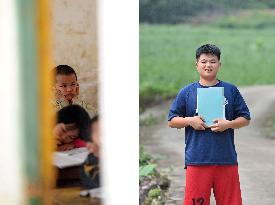
(230603) -- NANNING, June 3, 2023 (Xinhua) -- This combo photo shows 6-year-old Wei Kangtao having class at school in Dahua Township on March 27, 2012 (L, photo taken by Xinhua photographer Huang Xiaobang) and Wei Kangtao, who is a senior high school student now, posing for a photo on May 21, 2023 (R, photo taken by Xinhua photographer Hu Xingyu) in Dahua Yao Autonomous County, south China's Guangxi Zhuang Autonomous Region. TO GO WITH "Feature: Children in the photos witness changes in China mountain village" (Xinhua)

  •  
CHINA-GUANGXI-DAHUA-WATER SUPPLY-DEVELOPMENT (CN)

CHINA-GUANGXI-DAHUA-WATER SUPPLY-DEVELOPMENT (CN)

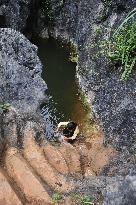
(230321) --DAHUA, March 21, 2023 (Xinhua) -- This photo taken on Sept. 3, 2012 shows a villager collecting water at a low-lying area on a mountain in Nonglei Village of Bansheng Township, Dahua Yao Autonomous County, south China's Guangxi Zhuang Autonomous Region. Situated at the center of the Karst landforms in west Guangxi, Dahua Yao Autonomous County had suffered from severe water deficit for ages. Since 2012, local government has been managing the water deficit through various measures like building water tanks or reservoirs to collect water or constructing water supply projects which could divert river water onto mountain areas to ease water shortage and provide safe drinking water for local people. Afters years of efforts, safe and convenient water supply is no longer a problem for the over 200,000 rural population in Dahua. (Xinhua/Huang Xiaobang)

  •  
Fuel rods removed at Genkai nuclear plant

Fuel rods removed at Genkai nuclear plant

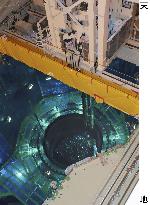
TOKYO, Japan - Work is underway to remove fuel rods from the No. 3 reactor at Kyushu Electric Power Co.'s Genkai nuclear power plant in Genkai Town, Saga Prefecture, in March 2013. Japan did not include 640kg of unused plutonium in its annual report to the International Atomic Energy Agency in 2012 and 2013. The unreported plutonium is part of the MOX fuel which was loaded to the No. 3 reactor in March 2011 during its regular checkup but was removed unused in March 2013 as the reactor has remained idle since the Fukushima nuclear crisis.

  •  
3 years after quake-tsunami

3 years after quake-tsunami

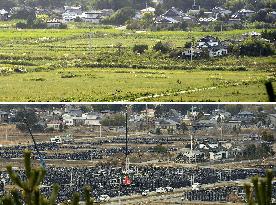
SENDAI, Japan - Photos show a coastal area of Naraha, Fukushima Prefecture, near the disaster-struck Fukushima Daiichi Nuclear Power Station. The upper photo was taken on Sept. 26, 2012, one and a half years after the Great East Japan Earthquake and tsunami, and the lower photo on March 3, 2014.

  •  
2 years after quake

2 years after quake

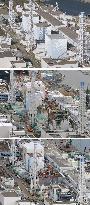
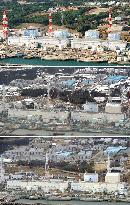
FUKUSHIMA, Japan - Aerial photos taken by Kyodo News show Fukushima Daiichi Nuclear Power Station in Fukushima Prefecture in October 2008 (top), on Feb. 26, 2012 (center), about a year after a nuclear crisis triggered by the earthquake and tsunami on March 11, 2011, and on March 3, 2013. From back to front are the buildings housing the No. 1 to No. 4 reactors. The bottom photo shows a cover on the No. 1 reactor building used to prevent radioactive particles from being dispersed. Cranes are at work at No. 3 and No. 4 reactor buildings.

  •  
2 years after quake

2 years after quake

FUKUSHIMA, Japan - Aerial photos taken by Kyodo News show Fukushima Daiichi Nuclear Power Station in Fukushima Prefecture in December 2000 (top), on Feb. 26, 2012 (center), about a year after a nuclear crisis triggered by the earthquake and tsunami on March 11, 2011, and on March 3, 2013. From right to left are the buildings housing the No. 1 to No. 4 reactors.

  •  
Offshore wind turbine starts work

Offshore wind turbine starts work

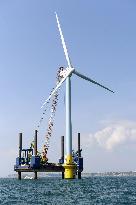
TOKYO, Japan - File photo taken in October 2012 shows a 126-meter-high wind turbine, with a 92-meter-diameter bladed wheel, built in the Pacific Ocean some 3 kilometers off Choshi, Chiba Prefecture. The turbine began to generate power on March 4, 2013. It is capable of generating around 2,400 kilowatt-hours.

  •  
Abandoned animals in Fukushima

Abandoned animals in Fukushima

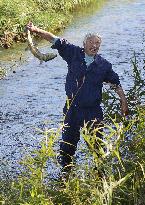
TOKYO, Japan - Photo taken in the town of Tomioka, Fukushima Prefecture, on Nov. 3, 2012, shows nonprofit group head Naoto Matsumura grabbing salmon from a stream the way he says he used to as a child. Town residents remain evacuated following the nuclear disaster triggered by the March 2011 earthquake and tsunami. The town's mayor declared in September 2012 that residents would not return for the next five years.

  •  
Driftwood violins keep alive memories of prequake days

Driftwood violins keep alive memories of prequake days

TOKYO, Japan - Polish violinist Nicolas Chumachenco (L) shows the back of his violin, on which a picture of the famed "miracle pine tree" is drawn. It was the only tree that survived the devastating tsunami that swept away a pine forest on the coast of Rikuzentakata, Iwate Prefecture, on March 11, 2011, when the Great East Japan Earthquake occurred. Photo taken Nov. 3, 2012 in Ikoma, Nara Prefecture. (Photo by Yukie Nishizawa)

  •  
1 and a half years after quake

1 and a half years after quake

SENDAI, Japan - Combination photos from a Kyodo News helicopter show an area in town of Onagawa, Miyagi Prefecture, on March 22, 2011 (L), after the March 11, 2011, Great East Japan Earthquake and subsequent tsunami, and about one and a half years later on Sept. 3, 2012 (R). Many of the buildings damaged by the tsunami have been removed.

  •  
1 and a half years after quake

1 and a half years after quake

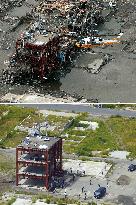
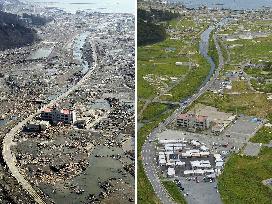
SENDAI, Japan - Combination photos from a Kyodo News helicopter show an area in the town of Minamisanriku, Miyagi Prefecture, on March 12, 2011 (top), after the March 11, 2011, Great East Japan Earthquake and subsequent tsunami, and about one and a half years later on Sept. 3, 2012 (bottom). Many people have visited the Minamisanriku municipal government's symbolic disaster office building seen in the photos to mourn the victims of the disaster.

  •  
1 and a half years after quake

1 and a half years after quake

ISHINOMAKI, Japan - Combination photos from a Kyodo News helicopter show an area in Ishinomaki, Miyagi Prefecture, on March 23, 2011 (L), after the March 11, 2011, Great East Japan Earthquake and subsequent tsunami, and about one and a half years later on Sept. 3, 2012 (R). Many children died or went missing as the tsunami hit Okawa Elementary School which stood in the area.

  •  
1 and a half years after quake

1 and a half years after quake

SENDAI, Japan - Combination photos from a Kyodo News helicopter show an area in town of Onagawa, Miyagi Prefecture, on April 10, 2011 (L), after the March 11, 2011, Great East Japan Earthquake and subsequent tsunami, and about one and a half years later on Sept. 3, 2012 (R). Many of the buildings damaged by the tsunami have been removed.

  •  
1 and a half years after quake

1 and a half years after quake

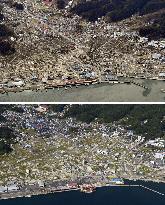
SENDAI, Japan - Combination photos from a Kyodo News helicopter show an area in the town of Yamada, Iwate Prefecture, on March 28, 2011 (top), after the March 11, 2011, Great East Japan Earthquake, and about one and a half years later on Sept. 3, 2012 (bottom).

  •  
1 and a half years after quake

1 and a half years after quake

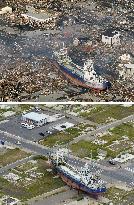
SENDAI, Japan - Combination photos from a Kyodo News helicopter show an area in Kesennuma, Miyagi Prefecture, on March 12, 2011 (top), after the March 11, 2011, Great East Japan Earthquake and tsunami, and about one and a half years later on Sept. 3, 2012 (bottom). An improvised convenience store outlet has begun operating near the fishing boat carried ashore by the tsunami.

  •  
1 and a half years after quake

1 and a half years after quake

SENDAI, Japan - Combination photos from a Kyodo News helicopter show an area in the town of Minamisanriku, Miyagi Prefecture, on March 13, 2011 (L), after the March 11, 2011, Great East Japan Earthquake and subsequent tsunami, and about one and a half years later on Sept. 3, 2012 (R). A shopping area has been established at bottom R.

  •  
1 and a half years after quake

1 and a half years after quake

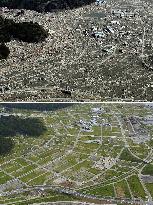
SENDAI, Japan - Combination photos from a Kyodo News helicopter show an area in Rikuzentakata, Iwate Prefecture, on March 23, 2011 (top), after the March 11, 2011, Great East Japan Earthquake, and about one and a half years later on Sept. 3, 2012 (bottom).

  •  
1 and a half years after quake

1 and a half years after quake

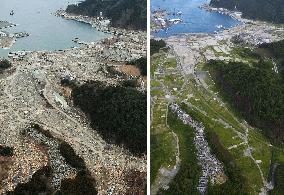
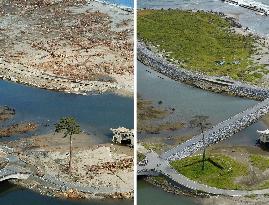
SENDAI, Japan - Combination photos from a Kyodo News helicopter show an area in Rikuzentakata, Iwate Prefecture, on March 23, 2011 (L), after the March 11, 2011, Great East Japan Earthquake, and about one and a half years later on Sept. 3, 2012 (R). In the photos is the so-called ''miracle pine,'' the only tree that survived the disaster in the area though it withered later.

  •  
1 and a half years after quake

1 and a half years after quake

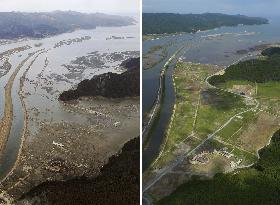
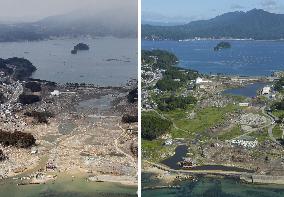
SENDAI, Japan - Combination photos from a Kyodo News helicopter show an area in the town of Otsuchi, Iwate Prefecture, on April 10, 2011 (L), after the March 11, 2011, Great East Japan Earthquake, and about one and a half years later on Sept. 3, 2012 (R).

  •  
1 and a half years after quake

1 and a half years after quake

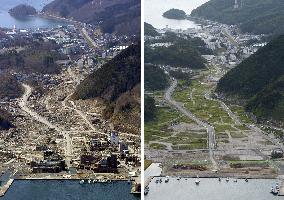
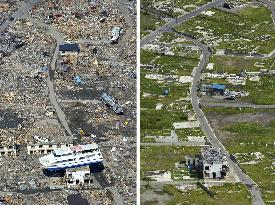
SENDAI, Japan - Combination photos from a Kyodo News helicopter show an area in the town of Yamada, Iwate Prefecture, on March 23, 2011 (L), after the March 11, 2011, Great East Japan Earthquake, and about one and a half years later on Sept. 3, 2012 (R).

  •  
Oi plant's No. 4 reactor starts capacity operation

Oi plant's No. 4 reactor starts capacity operation

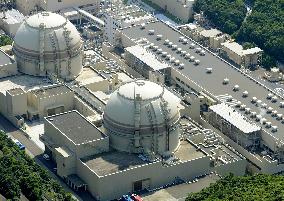
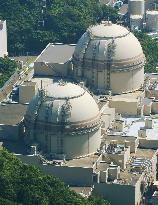
OBAMA, Japan - Photo from a Kyodo News helicopter shows the No. 4 reactor building (right) at Kansai Electric Power Co.'s Oi nuclear power plant in the town of Oi, Fukui Prefecture, on July 25, 2012. The reactor, which is the second to go back online after all of Japan's commercial reactors were taken offline for regular checks in the wake of the March 2011 Fukushima nuclear accident, started full-capacity power generation early on July 25 to ease electricity shortages in western Japan. The building housing the No. 3 reactor, the first to resume operation, is seen to the left.

  •  
Oi plant's No. 4 reactor starts capacity operation

Oi plant's No. 4 reactor starts capacity operation

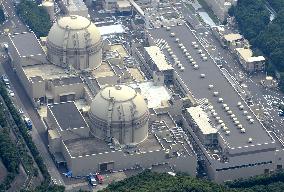
OBAMA, Japan - Photo from a Kyodo News helicopter shows the No. 4 reactor building (front) at Kansai Electric Power Co.'s Oi nuclear power plant in the town of Oi, Fukui Prefecture, on July 25, 2012. The reactor, which is the second to go back online after all of Japan's commercial reactors were taken offline for regular checks in the wake of the March 2011 Fukushima nuclear accident, started full-capacity power generation early on July 25 to ease electricity shortages in western Japan. The building housing the No. 3 reactor, the first to resume operation, is seen in the back.

  •  
Oi No. 4 reactor begins generating power

Oi No. 4 reactor begins generating power

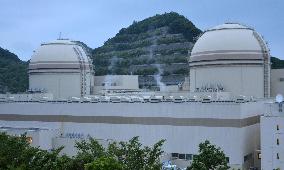
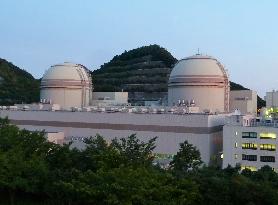
OI, Japan - Photo shows the No. 4 reactor (L) at the Oi nuclear power plant of Kansai Electric Power Co. in Fukui Prefecture on July 21, 2012. The No. 4 reactor started generating and transmitting electricity later in the day. The reactor is the second to go back online after all of Japan's commercial reactors were taken offline for regular checks in the wake of the March 2011 Fukushima nuclear accident. The first to resume operation was the Oi plant's No. 3 reactor (R).

  •  
Oi reactor regains criticality

Oi reactor regains criticality

OI, Japan - Photo from a Kyodo News helicopter shows the No. 4 reactor (front) of the Oi nuclear power station in Fukui Prefecture on July 19, 2012. The reactor reached criticality that morning following its reactivation the night before by its operator, Kansai Electric Power Co. The reactor is the second to go back online after all of Japan's commercial reactors were taken offline for regular checks in the wake of the March 2011 Fukushima nuclear crisis. The first to resume operation was the Oi plant's No. 3 reactor (back) which was brought to full operation on July 9.

  •  
Oi reactor regains criticality

Oi reactor regains criticality

OI, Japan - Photo shows the No. 4 reactor (L) of the Oi nuclear power station in Fukui Prefecture on July 19, 2012. The reactor reached criticality that morning following its reactivation the night before by its operator, Kansai Electric Power Co. The reactor is the second to go back online, after all of Japan's commercial reactors were taken offline for regular checks in the wake of the March 2011 Fukushima nuclear crisis. The first to resume operation was the Oi plant's No. 3 reactor (R) which was brought to full operation on July 9.

  •  
2nd reactor restarted at Oi power plant

2nd reactor restarted at Oi power plant

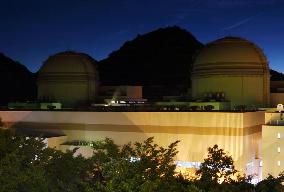
OI, Japan - Photo taken July 18, 2012, shows the No. 4 reactor building (L) at Kansai Electric Power Co.'s Oi nuclear power plant in the town of Oi, Fukui Prefecture. The No. 4 reactor was restarted later, around 9 p.m., the same day, becoming only the second reactor to resume operation after being shut down for periodic checks since the Fukushima nuclear crisis began in March 2011. The building housing the No. 3 reactor, which the utility reactivated on July 1 and brought to full operation on July 9, can be seen to the right.

  •  
Another reactor at Oi power plant reactivated

Another reactor at Oi power plant reactivated

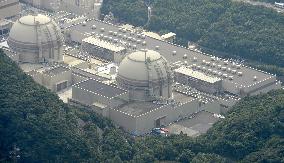
NAGOYA, Japan - Photo taken from a Kyodo News helicopter on July 9, 2012, shows the No. 4 reactor building (front) at Kansai Electric Power Co.'s Oi nuclear power plant in the town of Oi, Fukui Prefecture. The No. 4 reactor was reactivated around 9 p.m. on July 18, becoming only the second reactor to resume operation after being shut down for periodic checks since the Fukushima nuclear crisis began in March 2011. The building housing the No. 3 reactor, which the utility reactivated on July 1 and brought to full operation on July 9, stands just behind.

  •  
Mazda to boost production capacity for CX-5 SUV

Mazda to boost production capacity for CX-5 SUV

HIROSHIMA, Japan - Photo taken July 3, 2012, shows Mazda Motor Corp.'s auto assembly plant in the city of Hiroshima. Mazda said the same day it will boost production capacity for its smash hit CX-5 sport utility vehicle to 240,000 vehicles a year the following March, from 160,000 units, due to robust sales at home and abroad.

  •  
Noda visits tsunami-hit area

Noda visits tsunami-hit area

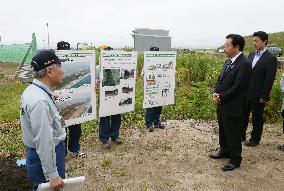
SENDAI, Japan - Prime Minister Yoshihiko Noda (2nd from R) and Environment Minister Goshi Hosono (R) are briefed in Sendai, Miyagi Prefecture, by local officials on July 3, 2012, on an ongoing project to develop a disaster-prevention forest by reclaiming land using rubble from the March 2011 disaster. (Pool photo)

  •  
Oi reactors

Oi reactors

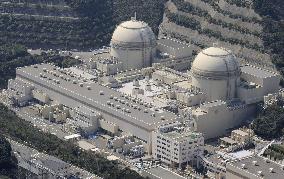
TOKYO, Japan - File photo in March 2012 shows (from R) No. 3 and No. 4 reactors of the Oi nuclear power plant in Fukui Prefecture. Prime Minister Yoshihiko Noda mentioned on June 8, 2012, the need to reactivate the two idled reactors at the Oi plant to prevent a power crunch this summer, in a stepped-up effort to secure public support and consent from Fukui Prefecture which hosts the plant.

  •  
Young ibis flies

Young ibis flies

SADO, Japan - A young crested ibis flies in Sado, Niigata Prefecture, on May 31, 2012. The bird was one of three crested ibis chicks born in late April 2012 to a 3-year-old male and a 2-year-old female released in March 2011. They are believed to have begun learning to fly between May 25 and 27, 2012, becoming the first crested ibises to do so in the wild for 38 years in Japan. (Pool photo)

  •  
Young ibis on rooftop

Young ibis on rooftop

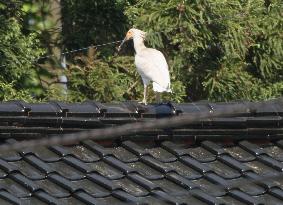
SADO, Japan - A young crested ibis is perched on a rooftop in Sado, Niigata Prefecture, on May 31, 2012. The bird was one of three crested ibis chicks born in late April 2012 to a 3-year-old male and a 2-year-old female released in March 2011. The one-month-old birds are believed to have begun learning to fly between May 25 and 27, 2012, becoming the first crested ibises to do so in the wild for 38 years in Japan. (Pool photo)

  •  
Young ibis on tree

Young ibis on tree

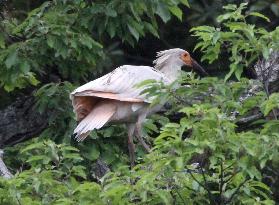
SADO, Japan - A young crested ibis stands on a tree branch in Sado, Niigata Prefecture, on May 31, 2012. The bird was one of three crested ibis chicks born in late April 2012 to a 3-year-old male and a 2-year-old female released in March 2011. The one-month-old birds are believed to have begun learning to fly between May 25 and 27, 2012, becoming the first crested ibises to do so in the wild for 38 years in Japan. (Pool photo)

  •  
Young ibis flies

Young ibis flies

SADO, Japan - A young crested ibis flies in Sado, Niigata Prefecture, on May 31, 2012. The bird was one of three crested ibis chicks born in late April 2012 to a 3-year-old male and a 2-year-old female released in March 2011. They are believed to have begun learning to fly between May 25 and 27, 2012, becoming the first crested ibises to do so in the wild for 38 years in Japan. (Pool photo)

  •  
Young ibis flies

Young ibis flies

SADO, Japan - A young crested ibis (top) flies in Sado, Niigata Prefecture, on May 31, 2012. The bird was one of three crested ibis chicks born in late April 2012 to a 3-year-old male and a 2-year-old female released in March 2011. They are believed to have begun learning to fly between May 25 and 27, 2012, becoming the first crested ibises to do so in the wild for 38 years in Japan. At bottom is one of its parents. (Pool photo)

  •  
Young ibis flies

Young ibis flies

SADO, Japan - A young crested ibis flies in Sado, Niigata Prefecture, on May 31, 2012. The bird was one of three crested ibis chicks born in late April 2012 to a 3-year-old male and a 2-year-old female released in March 2011. They are believed to have begun learning to fly between May 25 and 27, 2012, becoming the first crested ibises to do so in the wild for 38 years in Japan. (Pool photo)

  •  
Japan's last nuclear reactor goes offline

Japan's last nuclear reactor goes offline

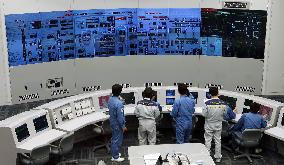
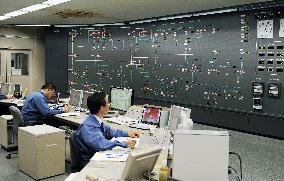
SAPPORO, Japan - Operators at 11:03 p.m. on May 5, 2012, look at displays in the central control room for the No. 3 reactor at Hokkaido Electric Power Co.'s Tomari nuclear power plant in the village of Tomari, Hokkaido, after Japan's last operating commercial reactor went offline for mandatory routine maintenance. The nation was left without electricity generated by nuclear power for the first time in 42 years, in the wake of the Fukushima nuclear crisis triggered by the March 2011 earthquake and tsunami. (Pool photo)

  •  
Japan's last nuclear reactor goes offline

Japan's last nuclear reactor goes offline

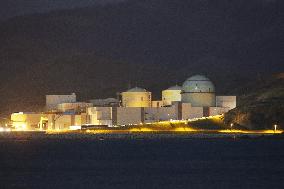
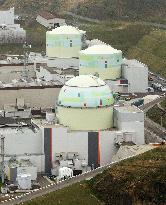
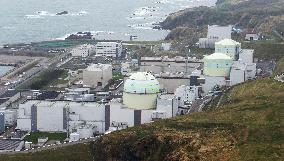
SAPPORO, Japan - Photo taken at 11:08 p.m. on May 5, 2012, shows Hokkaido Electric Power Co.'s Tomari nuclear power plant in the village of Tomari, Hokkaido. The building housing the No. 3 reactor can be seen to the right. The photo was taken shortly after the reactor, Japan's last operating commercial nuclear reactor, went offline for mandatory routine maintenance, leaving the nation without electricity generated by nuclear power for the first time in 42 years, in the wake of the Fukushima nuclear crisis triggered by the March 2011 earthquake and tsunami.

  •  
Japan's last nuclear reactor goes offline

Japan's last nuclear reactor goes offline

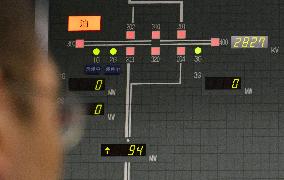
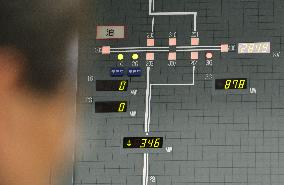
TOKYO, Japan - A display in the head office of Hokkaido Electric Power Co. in Sapporo, Hokkaido, indicates the output of the No. 3 reactor at its Tomari nuclear power plant in the village of Tomari, Hokkaido, has fallen to zero at 11:03 p.m. on May 5, 2012. The reactor, Japan's last operating commercial nuclear reactor, went offline for mandatory routine maintenance, leaving the nation without electricity generated by nuclear power for the first time in 42 years, in the wake of the Fukushima nuclear crisis triggered by the March 2011 earthquake and tsunami. (Pool photo)

  •  
Japan's last nuclear reactor going offline

Japan's last nuclear reactor going offline

TOKYO, Japan - A display in the head office of Hokkaido Electric Power Co. in Sapporo, Hokkaido, indicates output of the No. 3 reactor at its Tomari nuclear power plant in the village of Tomari in the prefecture falling at 5:03 p.m. on May 5, 2012. The reactor, Japan's last operating commercial nuclear reactor, is set to go offline late the same day for mandatory routine maintenance, leaving the nation without atomic-generated electricity for the first time in 42 years in the wake of the quake-triggered Fukushima nuclear crisis in March 2011. (Pool photo)

  •  
Tomari nuclear power plant

Tomari nuclear power plant

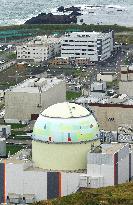
SAPPORO, Japan - Photo taken from a Kyodo News helicopter on May 5, 2012, shows the facilities of Hokkaido Electric Power Co.'s Tomari nuclear power plant in the village of Tomari, Hokkaido. The building housing the No. 3 reactor (front) can be seen. The reactor, Japan's last operating commercial nuclear reactor, is set to go offline late the same day for mandatory routine maintenance, leaving the nation without atomic-generated electricity for the first time in 42 years in the wake of the quake-triggered Fukushima nuclear crisis in March 2011.

  •  
Japan's last nuclear reactor going offline

Japan's last nuclear reactor going offline

TOKYO, Japan - An operator at 5:04 p.m. on May 5, 2012, looks at a display in the head office of Hokkaido Electric Power Co. in Sapporo, Hokkaido, that shows output of the No. 3 reactor at its Tomari nuclear power plant in the village in the prefecture. The reactor, Japan's last operating commercial nuclear reactor, is set to go offline late the same day for mandatory routine maintenance, leaving the nation without atomic-generated electricity for the first time in 42 years in the wake of the quake-triggered Fukushima nuclear crisis in March 2011. (Pool photo)

  •  
Tomari nuclear power plant

Tomari nuclear power plant

SAPPORO, Japan - Photo taken from a Kyodo News helicopter on May 5, 2012, shows the facilities of Hokkaido Electric Power Co.'s Tomari nuclear power plant in the village of Tomari, Hokkaido. The building housing the No. 3 reactor (front) can be seen. The reactor, Japan's last operating commercial nuclear reactor, is set to go offline late the same day for mandatory routine maintenance, leaving the nation without atomic-generated electricity for the first time in 42 years in the wake of the quake-triggered Fukushima nuclear crisis in March 2011.

  •  
Tomari nuclear power plant

Tomari nuclear power plant

SAPPORO, Japan - Photo taken from a Kyodo News helicopter on May 5, 2012, shows the facilities of Hokkaido Electric Power Co.'s Tomari nuclear power plant in the village of Tomari, Hokkaido. The building housing the No. 3 reactor (front) can be seen. The reactor, Japan's last operating commercial nuclear reactor, is set to go offline late the same day for mandatory routine maintenance, leaving the nation without atomic-generated electricity for the first time in 42 years in the wake of the quake-triggered Fukushima nuclear crisis in March 2011.

  •  
Pakistan nuclear institute

Pakistan nuclear institute

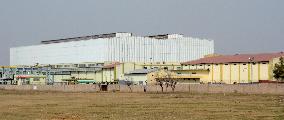
TAXILA, Pakistan - Photo taken in March 2012 shows the Heavy Mechanical Complex-3, a nuclear institute in Taxila, near Islamabad. Pakistan reportedly completed its first homegrown pressure vessel for a nuclear reactor at the institute.

  • Main
  • Top
  • Editorial
  • Creative
  • About Us
  • About ILG
  • Terms of use
  • Company
  • BEHIND
  • Price List
  • Single Plan
  • Monthly Plan
  • Services
  • Shooting
  • Rights Clearance
  • Support
  • FAQ
  • How To Buy
  • Contact Us
  • Become a Partner

© KYODO NEWS IMAGES INC

All Rights Reserved.

  • Editorial
  • Olympics
  • News
  • Sports
  • Japan
  • Tech
  • Royal
  • Disaster
  • NorthKorea
  • Old Japan
  • SNS
  • Creative
  • Food
  • Japan
  • Landscape
  • Animal
  • Popular
  • #Ukraine
  • #Thailand
  • #coronavirus
  • #N. Korea
  • #China
  • #Russia
  • #Ukraine
  • #Thailand
  • #coronavirus
  • #N. Korea
  • #China
  • #Russia
  • Food
  • Japan
  • Landscape
  • Animal
  • Olympics
  • News
  • Sports
  • Japan
  • Tech
  • Royal
  • Disaster
  • NorthKorea
  • Old Japan
  • SNS